Reel Recipes
Paste a cooking video, get back a clean recipe you can actually cook from.
- YT · IG · FBSources
- 3-tier fallbackTranscript
- 100% localWhere
Opens the real app with sample recipes in a new tab: paste a link and watch it work.
How you’d use it
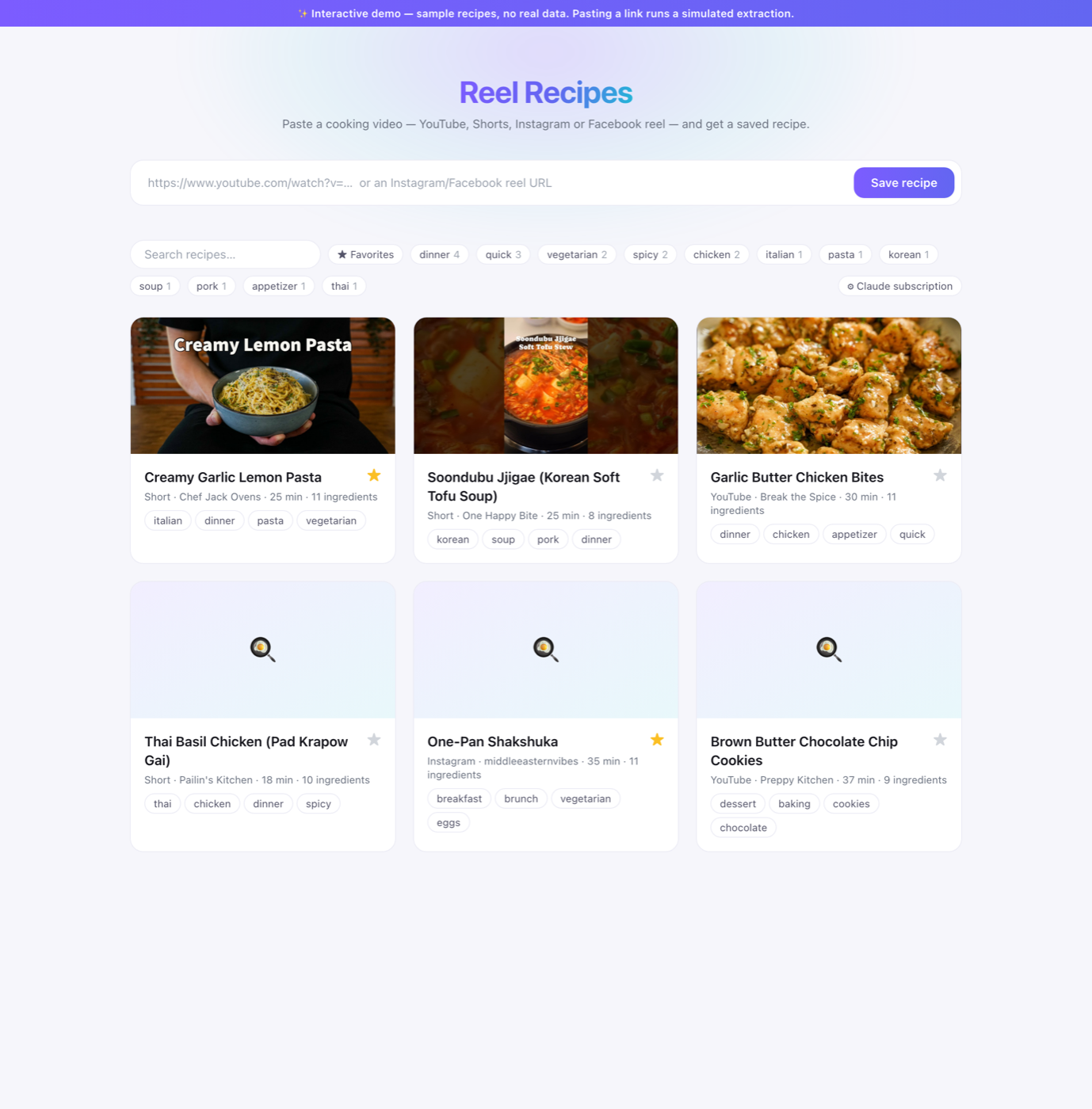
You paste a link to a cooking video and it pulls the captions (or transcribes the audio), reads the recipe out of it, and saves a clean card (ingredients, step-by-step method, timings, and tags) that you can search, filter, and favorite.
Here's what using it actually looks like:
Paste a video link
Any YouTube, Shorts, Instagram, or Facebook cooking reel, just drop in the URL.
It reads the recipe
It grabs the captions or transcribes the audio, then pulls out the ingredients, steps, and timings.
You get a clean card
A structured recipe with a checkable ingredient list and numbered steps, no ads, no life story, no scrolling.
Build your collection
Search, filter by tag or cuisine, and star your favorites so your go-to recipes are one click away.
How it’s built
The transcript is the hard part, so it degrades in tiers: it first tries the video's own captions, falls back to local Whisper transcription of the audio when there are none, and finally to the description alone, so it almost always has something to work with. Then a JSON-schema-constrained model turns messy, unpunctuated cooking narration into a strict recipe shape (quantities, units, ordered steps, a confidence rating), and the structuring engine is swappable between the Claude subscription CLI, a local Ollama model, or the Anthropic API.
Getting reliable structured output from someone rambling over a stovetop.
- yt-dlp pulls video metadata, captions, audio, and a thumbnail; Instagram/Facebook get an automatic cookie-based retry
- Three-tier transcript fallback: video captions → local Whisper → description-only
- A JSON-schema-constrained model structures the transcript into a validated recipe (ingredients, steps, timings, tags)
- Swappable structuring backend: Claude Code CLI, local Ollama, or the Anthropic API
- Saved locally to SQLite with full-text search, tag filters, and favorites
- Next.js
- SQLite (better-sqlite3)
- yt-dlp
- Whisper
- Claude
where I’m taking it
Meal planning and auto-built grocery lists from your saved recipes.
Want to use this?
Request access, ask how it works, or have me adapt it.
- Type
- App
- Category
- Personal Automation
- Status
- Live
- Built with
- Next.js · SQLite (better-sqlite3) · yt-dlp · Whisper · Claude